ArteBA
ANTONELA AIASSA, MARIA ELENA POMBO
28-30 AUGUST 2025
La Memoria de la tierra
What does the land remember? What does it hold in its waters in its minerals in its sedimented layers of time? Can it miss what once inhabited it? Can it speak to us even when we have not lived it only imagined it?
This exhibition begins with a simple yet radical premise. Territory is not only a physical support or a symbol of identity but a matter that remembers. The land is seen as a living archive as a porous surface where absences, gestures and bonds are inscribed.
Throughout Latin America territory has historically been a space of reverie but also of dispute appropriation and displacement. From before colonization to the present it has functioned as a resource as a border as a stage and as a body. Thinking of the land not only as landscape but as memory allows us to unsettle linear origin stories and to open space for other forms of belonging. These forms may be unstable hybrid or interrupted but they are equally valid.
In this shift from seeing the land as background to recognizing it as an interlocutor a contemporary sensitivity is activated. This sensitivity does not seek to fix identities but rather to ask what kinds of relations are still possible.
The works gathered here explore possible forms of connection through distance transit or imagination. Acknowledging that memory is not always inherited or continuous allows us to inhabit it differently. Some memories are transmitted without being lived. There are languages that whisper through objects pigments or textures and senses of rootedness that are built through gesture rather than lineage.
The Memory of the Land brings together the practices of María Elena Pombo and Antonela Aiassa. These two Latin American artists come from different territories and work with different materials but they share a common concern. They both ask how to relate to something that cannot be fully possessed. In their work matter does not represent. It acts. And the ancestral does not appear as a certainty but as an open question.
María Elena Pombo from Caracas born in 1988 presents the new series Tejiendo la Anemoia. It is composed of three sculptures made with water and sandstone collected in Venezuela during her return in 2023 after eight years of absence. The journey passed through territories that had long inhabited her imagination including places like Angel Falls and Auyán Tepui and unfolded in dialogue with members of the Pemón community. The collected materials were transformed into algae-based threads using techniques derived from molecular gastronomy which the artist has reappropriated through biotextile practices. The result is a contemporary alchemy where matter becomes woven memory.
Each sculpture acts as a ritual of reconnection between body and territory between intimacy and the unknown between lived and projected memory. The installation includes a documentary video with footage from the journey and interviews along with a series of small syringe-shaped containers that preserve the materials in their original state. This physical archive serves as a visual glossary of the technical process and also as testimony to a memory that does not seek completeness but contact.
The series connects to her earlier work Tejiendo la Morriña which centered on the landscapes of her childhood. Morriña is a Galician word that refers to territorial longing in the language of Pombo’s paternal grandparents. If that earlier series spoke through bodily memory Tejiendo la Anemoia draws from imagined memory. It is a longing for a place never lived but still calling.
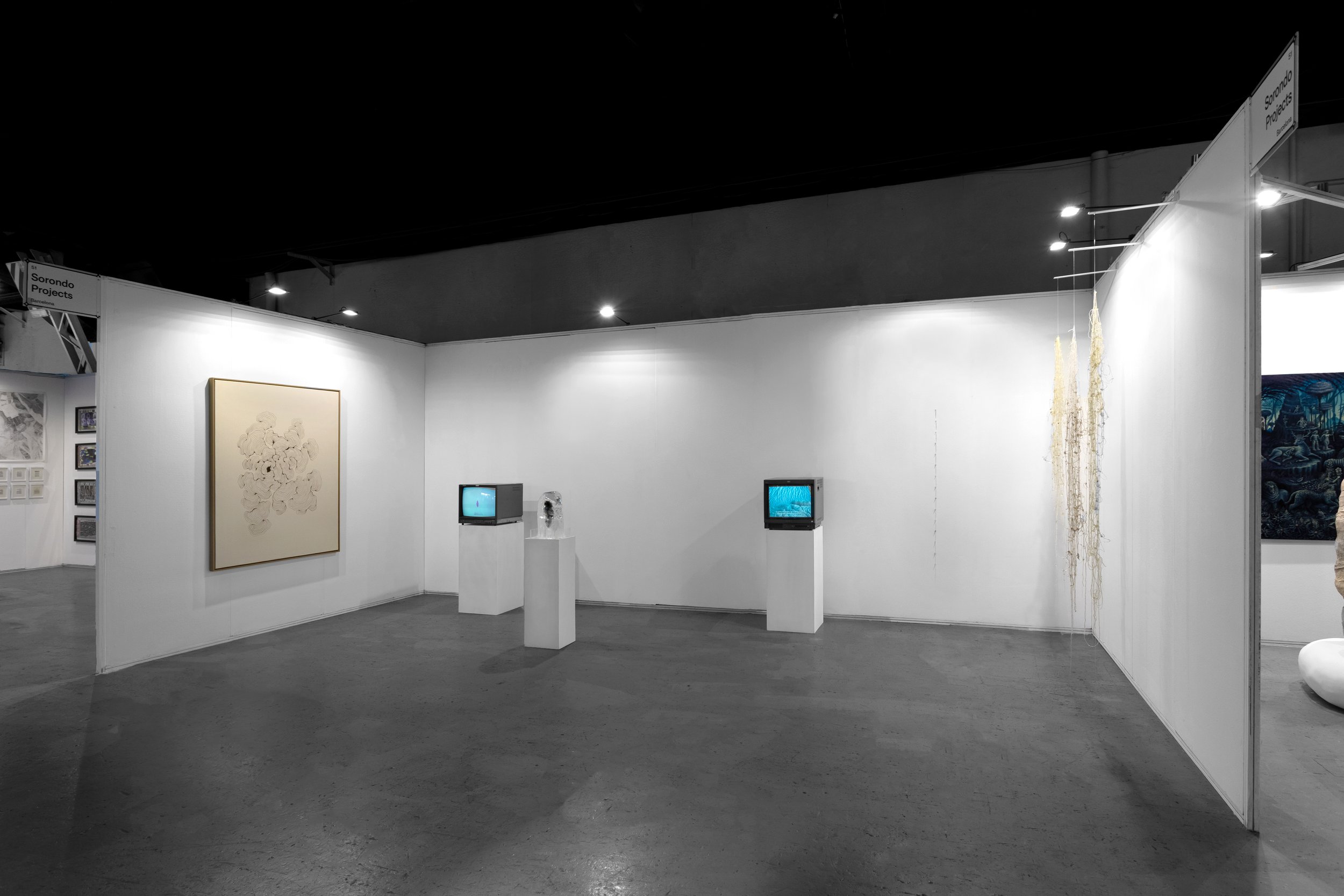
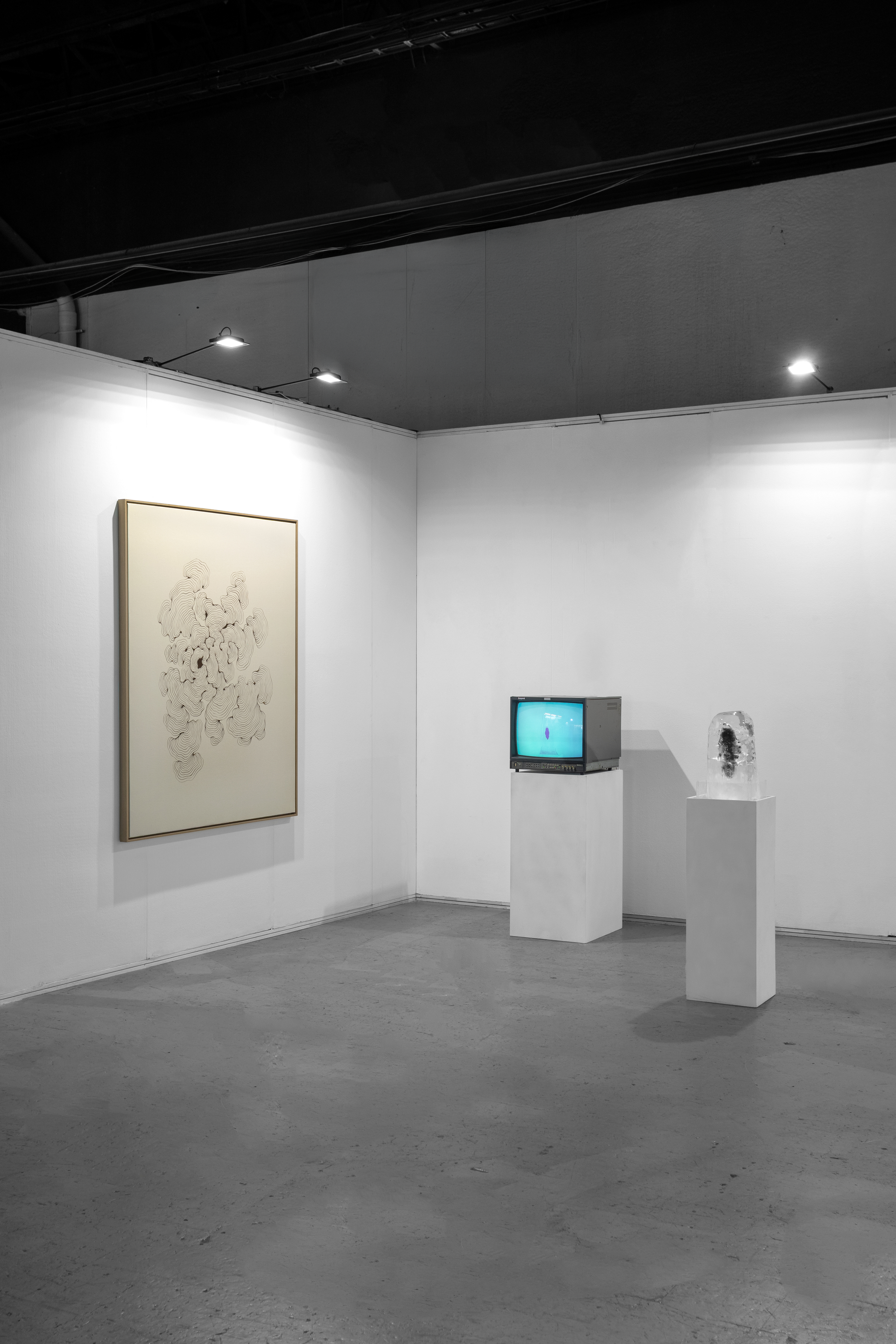
Antonela Aiassa from Buenos Aires born in 1988 presents El núcleo de lo múltiple an installation that explores cycles of transformation the fragility of matter and shifts in identity. At the center of the work a block of ice encases a core of natural pigment extracted in collaboration with Liliana Pastrana an artisan with whom Aiassa has built a sustained and ethical relationship. The pigment comes from Tafí del Valle an ancestral and deeply symbolic territory within the landscape of northwestern Argentina.
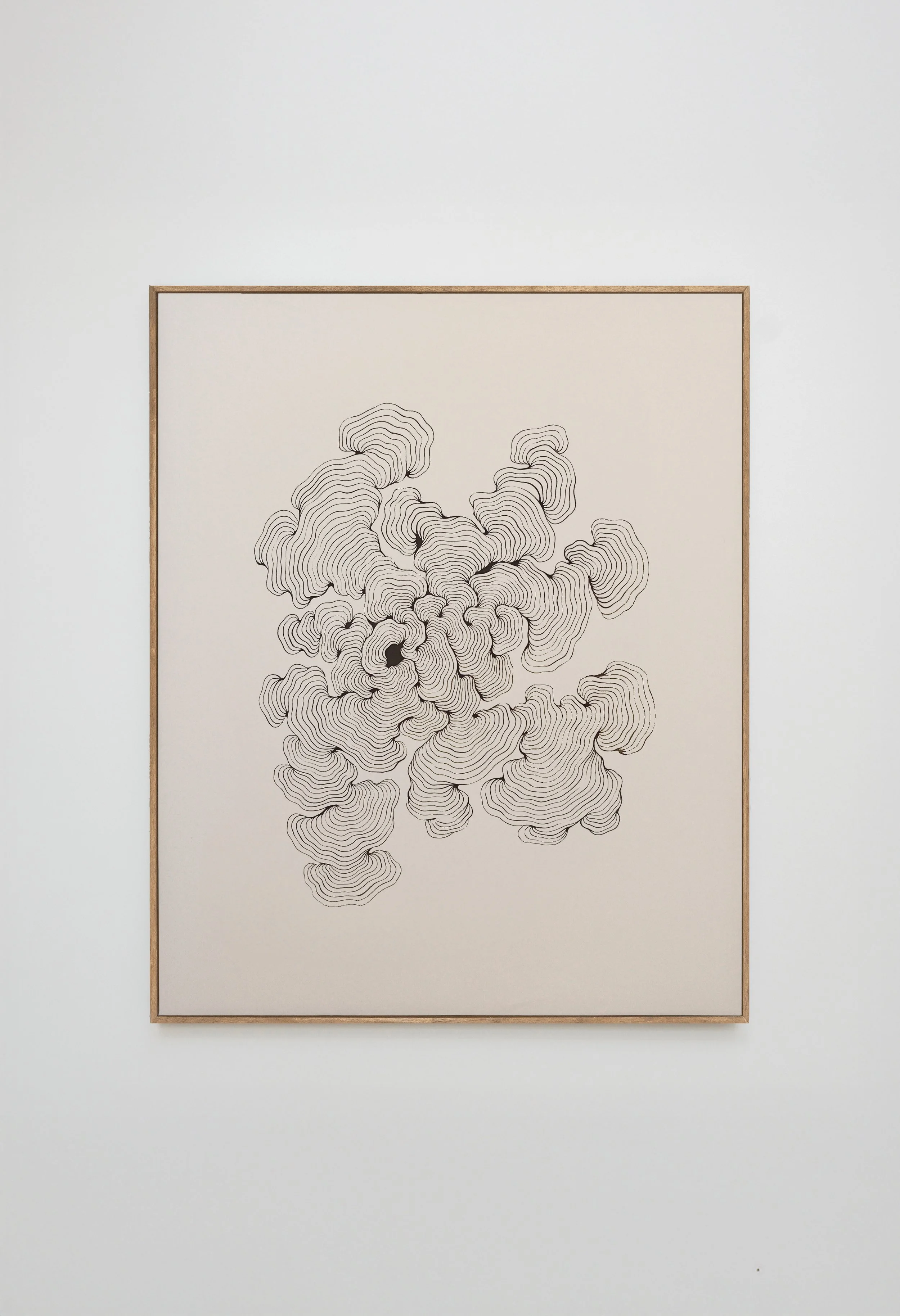
As the ice melts the pigment is gradually released creating ephemeral and unpredictable forms as if memory itself emerged drop by drop. The installation also includes a painting on cotton dyed with organic pigments that evokes an expanded droplet and a video documenting the melting process allowing the work to persist even after its transformation.
Drawing inspiration from Taoist philosophy the liquid modernity of Zygmunt Bauman and the idea of identity as a project proposed by Anthony Giddens Aiassa turns time into mutable matter. The ice speaks to impermanence. The pigment speaks to essence. Both materials come from landscapes with which the artist has no direct connection but instead a symbolic one. These are internal territories projected onto real matter. Her questions are not who am I but rather what am I remembering what am I letting go what am I becoming now.
The Memory of the Land offers a shared terrain where two practices intertwine without force. In both cases sculpture becomes a porous language where the geological and the emotional the ancestral and the contemporary coexist without resolution. Here the land does not recognize boundaries. It insists. It flows. It murmurs.